
The Shift From Posed to Present
Walk into any Indian wedding today and you will see something your parents' generation never did: photographers moving through the crowd like guests with cameras, not directors with clipboards. The posed group shot still exists, but it no longer owns the day. What owns the day now is the moment nobody staged.
The reason is not a trend. It is a change in what couples believe a wedding photograph is for. A posed portrait proves you were there. A candid photograph proves you lived it. And after two years of weddings that were smaller, quieter, and more intentional, couples want proof of feeling, not just attendance.
What Candid Photography Actually Demands
Candid work is harder than it looks. Anyone can point a camera at a laughing relative. The skill is knowing when the laugh is real, when the tears are about to come, and when to step back instead of stepping in. That requires a photographer who understands human behaviour, not just aperture and shutter speed.
The Photographer as Observer
Our team treats a wedding like a documentary shoot. We do not arrive with a shot list and tick boxes. We arrive with a sense of the family's rhythm: who cries easily, who makes everyone laugh, which uncle will try to photobomb every frame. That knowledge tells us where to stand before the moment happens.
This is the part couples rarely consider when they book. Candid photography is not about the camera. It is about the photographer's instinct for anticipation. The best candid frames are captured a second before the emotion peaks, not after.
The Trust Factor
There is also a practical reality. Candid work only succeeds when the couple and their families forget the camera exists. That does not happen by accident. It happens because the photographer blends in, dresses appropriately, and never interrupts a moment to ask for a retake.
When we shoot, we move like guests. We do not stop the haldi to get a better angle. We do not ask the bride to repeat her laugh. The result is a set of images that feel true, because nothing in them was performed for us.
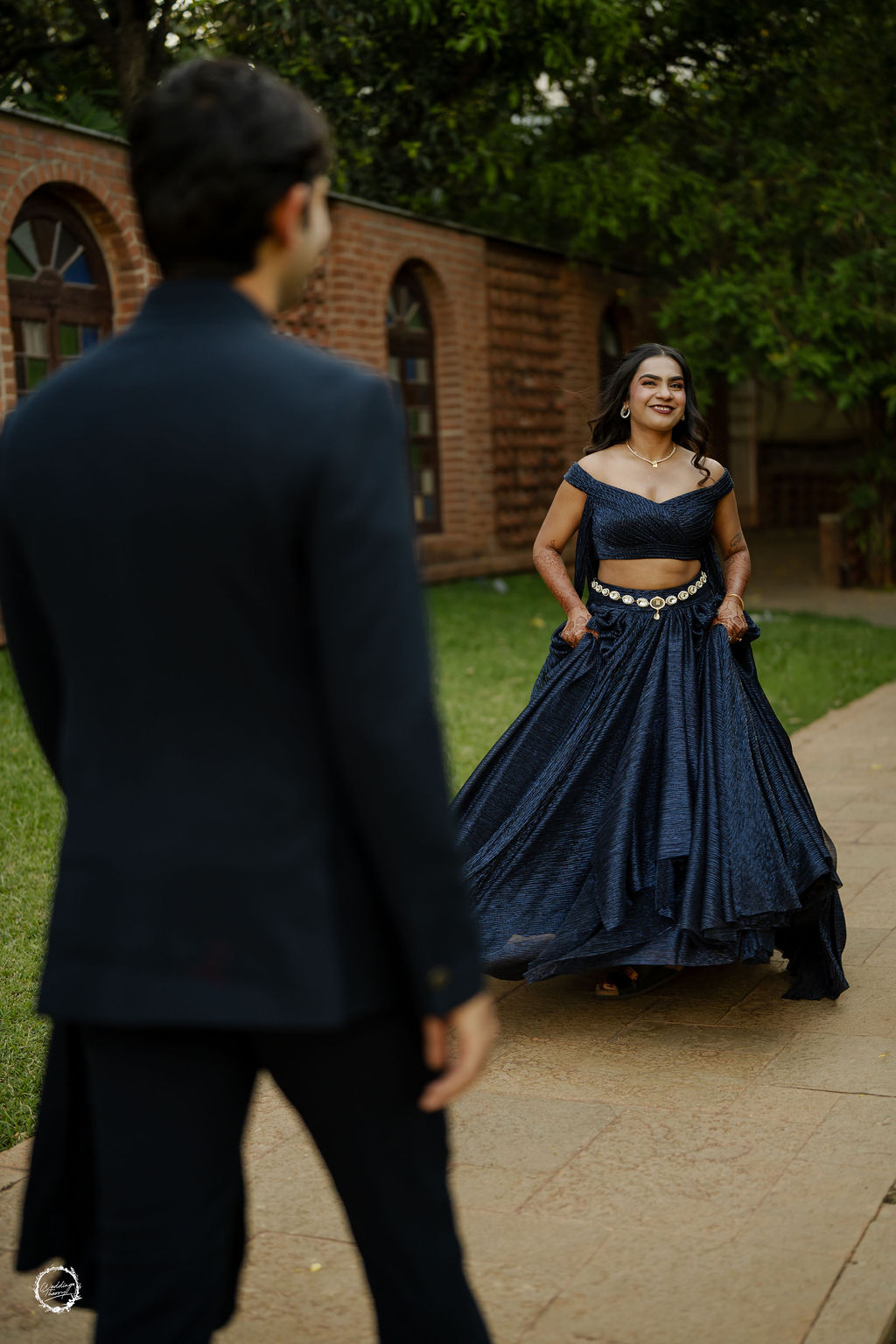
Why Couples Are Choosing This Style Now
The popularity of candid photography tracks with a broader cultural shift. Weddings are no longer only about family obligation. They are about the couple's personal story. That story is rarely told in a lineup of relatives staring at a lens. It is told in the way the groom's hands shake during the pheras, or the way the bride's mother fixes her dupatta one last time.
Social media has also played a part, but not in the way people assume. It is not about posting a perfect grid. It is about sharing something that feels real. A candid frame of two people laughing mid-conversation earns more genuine engagement than a perfectly lit portrait, because viewers can sense the authenticity.
The Memory Factor
There is a neurological reason candid images stay with us longer. Posed photographs are processed as documentation. Candid photographs are processed as experience. When you look back at your album in ten years, the images that make you feel something will not be the ones where everyone was smiling on cue. They will be the ones that capture a moment you barely remember happening.
That is the real value proposition. Candid photography is not about having more photos. It is about having photos that age better emotionally.
How to Get the Most From Your Candid Photographer
If you have decided candid coverage matters to you, there are a few things you can do to make it work better. The first is to let go of control. The second is to communicate what matters most.
- Tell your photographer which relationships are most important to you, such as your grandmother or your childhood friends, so they know where to focus attention.
- Resist the urge to pose for candids. If you see the camera, look away. The best frames happen when you forget it is there.
- Give your photographer access. If they need to be in the room during the bridal preparation, let them in. The most intimate moments happen before the ceremony.
- Trust their timing. Candid photographers often shoot more than they deliver. That is not inefficiency. That is how they ensure they do not miss the one frame that matters.
The Bottom Line
Candid photography is not a replacement for posed portraits. It is a complement. The posed images give you the formal record. The candid images give you the emotional record. Most couples we work with want both, but they now understand that the candid ones are the ones they will frame and share and cry over.
When you look at a photographer's portfolio, do not just look at the images. Ask how they were made. If the answer involves directing people into positions, you are looking at posed work disguised as candid. If the answer involves patience, observation, and a willingness to disappear, you have found someone who understands what candid photography actually requires.
The popularity of this style will not fade, because the desire behind it will not fade. People want to remember how their wedding felt, not just how it looked. That is a need no trend can erase.