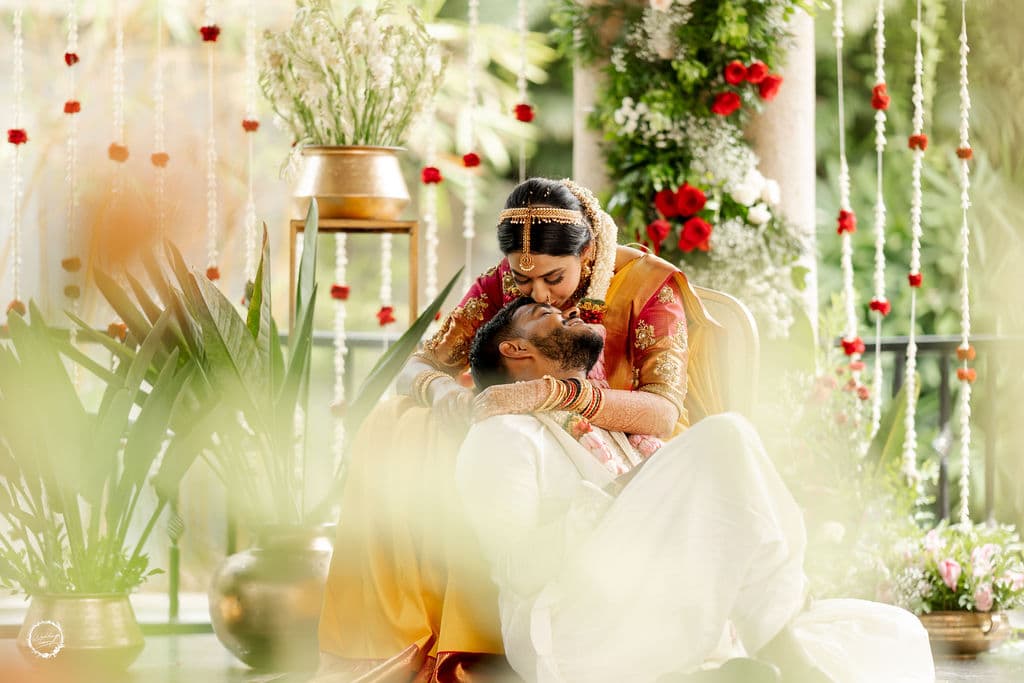
The Consultation Is Not an Interview
Most couples walk into a photographer consultation with a list of questions about packages, albums, and turnaround times. Those matter, but they are not what will protect you on the day itself. A consultation is your chance to read the person behind the camera, not just the price sheet.
You are about to hand this person access to the most emotionally charged hours of your life. They will be in the room while you cry, while your grandmother fixes your dupatta, while your best friend adjusts your varmala. The questions that matter are the ones that reveal how they behave in those moments.
Before you ask about pricing, ask about pressure. Ask about chaos. Ask what happens when the timeline falls apart, because it will.
Questions That Reveal Their Problem-Solving Instinct
Every photographer has a portfolio full of perfect images. What separates the professionals from the amateurs is what happens when the plan breaks. Your wedding will not follow the schedule. Someone will run late, rain will appear, or a family member will demand a group photo at the worst possible moment.
Ask directly: "Tell me about a wedding where something went wrong. What did you do?"
The answer tells you more than any highlight reel. A strong photographer will describe a specific situation with calm detail, what they communicated to the couple, and how they adapted. A weak one will give you a vague reassurance like "we handle it." That is not an answer.
Follow up with: "How do you handle a couple who is nervous or overwhelmed on the day?" You want to hear that they notice, that they step in with direction, and that they know when to step back. The best photographers are part director, part therapist, part friend.
What to Listen For in Their Answers
You are not just listening to the words. You are listening for specificity. A photographer who describes a real situation with real details has actually lived it. A photographer who speaks in generalities is selling you a fantasy.
Also listen for how they talk about the couple from that wedding. Do they speak with warmth or with annoyance? If they describe a difficult moment with empathy, they will treat you the same way.
Ask about their backup plan for equipment failure. A professional carries redundancies: two camera bodies, multiple lenses, backup memory cards. If they hesitate on this, that is a red flag.
The Questions Most Couples Forget to Ask
There are three areas that rarely come up in consultations but cause the most friction later. Cover these and you will save yourself real stress.
Who Exactly Will Be Shooting Your Wedding?
Many studios send a team, and the photographer you meet may not be the one who shows up. Ask plainly: "Who will be the lead photographer on my day? Will I meet them before the wedding?"
If the person in front of you is not the person behind the camera, you need to know that now, not on the morning of the wedding. Ask to see work from the actual team member who will be assigned. A portfolio is only useful if it belongs to the person who will be standing in your mandap.
How Do You Handle Family Dynamics?
Indian weddings are not just two people getting married. They are a gathering of generations, with all the complex relationships that come with that. Ask: "How do you handle family members who want to direct the photography?"
A good photographer has a system for this. They know how to politely manage an uncle who wants a different pose or a mother who wants fifty variations of the same group shot. You want to hear that they have a process, not that they just "go with the flow."
Ask about their approach to candid versus posed shots. Some families want every moment documented formally. Others want the photographer to disappear. There is no right answer, but there is a right fit for your family.
What Happens After the Wedding?
The delivery process is where couples are most often disappointed. Ask about timelines with specific numbers: "How long until we see a preview? How long until the full gallery? What is the format?"
Ask about the editing process. Some photographers deliver every usable image. Others curate heavily. Know which one you are getting. Ask about how many images you will receive and whether that number is a guarantee or a vague estimate.
Ask about raw files. Some studios provide them, some do not. There is no universal right answer, but you need to know what you are paying for.
Ask about the album design process. Will you have input? How many revisions are included? This is often the source of post-wedding frustration, and it is worth clarifying before you sign.
How to Read the Room During the Consultation
Beyond the questions, pay attention to the energy of the conversation. A photographer who is genuinely interested in your story will ask you questions too. They will want to know about your venue, your family traditions, your style. If the consultation is entirely about their work and their packages, that tells you something.
Notice how they react to your specific plans. If you mention a small, intimate ceremony, do they light up or do they push you toward a bigger package? If you mention a particular aesthetic, do they engage with it or do they steer you back to their own style? The right photographer adapts to you, not the other way around.
Trust your gut on the personal fit. This person will be with you for twelve hours on one of the most important days of your life. You need to feel comfortable being vulnerable around them. If something feels off in the consultation, it will not feel better on the wedding day.
Bring a list of questions with you. It shows you are serious, and it ensures you do not forget what matters. But also be ready to go off script. The best information often comes from the unplanned parts of the conversation.
The One Question That Changes Everything
Near the end of the consultation, ask this: "What do you wish couples asked you more often?"
This question does two things. It gives the photographer permission to share what they actually care about, and it reveals what they think is important. You will often learn more from this answer than from any direct question you could have asked.
Some photographers will talk about emotional moments. Others will talk about technical craft. Both are valid. What you are listening for is whether their priority aligns with yours. If they care about the same things you care about, you have found your photographer.
Then ask about their favorite part of Indian weddings specifically. If they light up describing the haldi ceremony or the baraat energy, you know they are not just tolerating your traditions, they genuinely love them. That passion will show up in your photographs.
The consultation is your chance to build trust before you sign. Use it well, and you will walk away with more than a contract. You will walk away with confidence.