
Why Your Wedding Photography Timeline Usually Breaks (And How to Fix It Before It Does)
Somewhere between the caterer's service notes and the pandit's muhurat, the photography timeline becomes the document everyone argues about and nobody owns. Couples treat it as a formality, a spreadsheet to tick off during the final vendor call. Then the day arrives, and the schedule quietly collapses by 4 p.m.
The problem is rarely the couple. It is that most timelines are built around logistics, not light, and around vendor convenience, not family dynamics.
Here is what actually determines whether your photos look calm and unhurried or rushed and slightly chaotic. It comes down to three decisions made months before the wedding, not on the morning itself.
The Two Things Every Timeline Must Protect
Before you block a single hour, agree on what the day is for. Not in a philosophical sense. In a practical one: which moments need to happen without interruption, and which people need to be in the frame when they do.
Buffer time is not wasted time
A wedding runs on Indian Standard Time plus forty-five minutes. Every ritual overruns. Every baraat takes longer than planned. Every family photo session expands once the grandparents arrive and want just one more with the cousins.
Photographers who have shot a hundred weddings build in slack without telling you, because telling you invites negotiation. If your timeline has no gaps, it has no resilience. A twenty-minute cushion before the varmala is not a delay. It is the reason the varmala photos are not shot in a panic.
Protect the getting-ready window
This is the single most underrated block in any Indian wedding schedule. It is also the one most often sacrificed when the mehendi runs late or the decor team needs the room.
Getting-ready photos carry the emotional weight of the entire album. The mother adjusting the dupatta. The sister doing the final pin. The moment the bride sees herself in the mirror before anyone else does. These cannot be recreated later. If the photographer is pulled into family portraits during this window, they are gone.
Give it ninety minutes. Do not schedule hair and makeup to end thirty minutes before the baraat arrives.
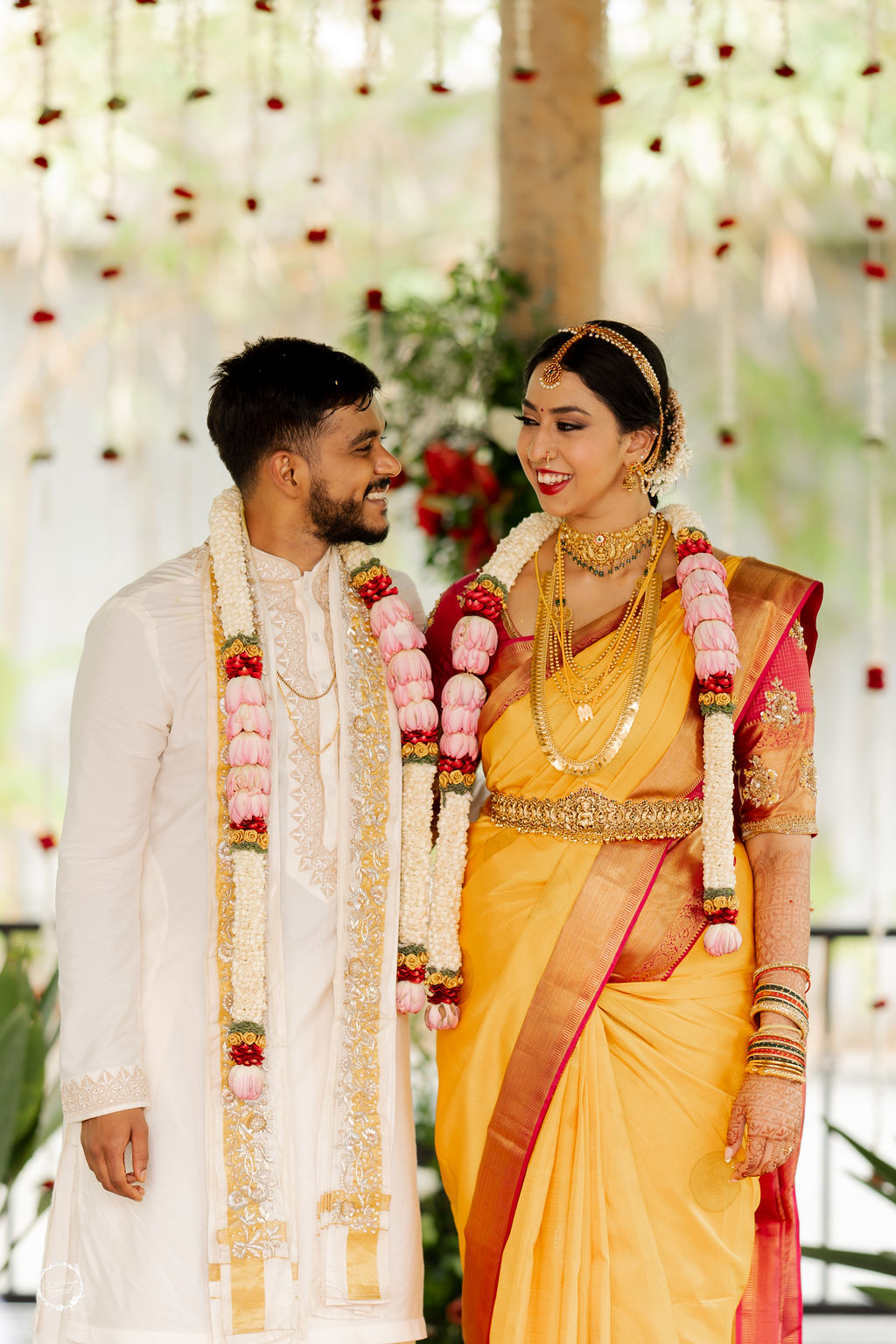
Building the Timeline Around Light, Not Just Rituals
Every experienced photographer in India plans around one thing the couple cannot move: the sun. Rituals can shift. Vendors can adapt. Light does not negotiate.
Golden hour and the pheras
If your pheras fall between 5:30 and 6:30 p.m. in winter, you are working with the most flattering light of the day. If they fall at 1 p.m. in June, you are working with harsh overhead sun and sweat, and no amount of editing fixes a squinting bride.
Ask your photographer where the sun will be during each key ritual. If they cannot answer that without checking, they are not planning your timeline, they are reacting to it.
When the muhurat is non-negotiable
Many families will not move the pheras. Fair enough. In that case, the solution is to move everything else around it. Schedule the couple's portrait session for the hour before sunset, not immediately after the ceremony when everyone wants to greet them.
Build the family portraits into the post-ceremony lunch, when relatives are already seated and stationary. This is the single most efficient trick in wedding photography, and almost nobody uses it.
The Family Photo List: Fewer Names, Better Photos
Most couples hand over a list of forty combinations. Most of those photos never get taken, and the ones that do look like a passport queue.
Assign a wrangler, not a list
Appoint one person from each side of the family who knows everyone and has the authority to pull people out of conversations. Give them the list, not the photographer. The photographer cannot chase aunts through a crowd and also compose a frame.
Twenty minutes of well-wrangled portraits beats an hour of the photographer shouting names into a mic.
Do the extended family photos at the reception, not the wedding
At the wedding, everyone is emotional, dressed in their best, and focused on the ceremony. At the reception, they are relaxed, seated, and easier to organise. Splitting the two sessions keeps the wedding day moving and gives you two distinct visual moods in the album.
What to Do When the Timeline Slips Anyway
It will. The question is not whether you will fall behind but what you sacrifice when you do.
- Cut the couple's solo portraits first. They can be reshot at the reception or the next morning. Ritual moments cannot.
- Never cut the getting-ready window. It is the only part of the day that is genuinely unrepeatable.
- Move family photos to a seated block. If relatives are already at their tables, the session takes half the time.
- Let the photographer eat. A hungry photographer at hour eleven is a slow photographer. Build a twenty-minute break into the schedule and protect it.
The couples who end up with albums that feel effortless are not the ones with the most detailed spreadsheet. They are the ones who decided, early, which three moments mattered most and built everything else around them.
If you are planning a wedding in Delhi, Jaipur, or anywhere the light and the logistics fight each other, start with those three moments. The rest of the timeline tends to fall into place.