
The Wedding Album Is Not a Recap
Most couples look at their parents' wedding albums and see a sequence of rituals, a visual checklist of what happened. But the album you want is not a recap of the day. It's a story with a pulse, one that brings back the feeling of your cousin's laugh during the baraat, the weight of the dupatta on your shoulders, the specific way your grandmother pressed your hand before the pheras.
The difference between a good album and a great one is not the number of photos. It's the selection. And selection starts with knowing which moments matter most, not just which ones look pretty on a screen.
Here's what we look for when we build an album that feels like your wedding, not somebody else's.
The Shots That Carry the Story
Every wedding has its own rhythm, but certain moments anchor the narrative. These are the ones we never miss, and the ones you should expect to see in your final album.
The Getting-Ready Hours
The quiet before the chaos is where emotion lives. The way your mother adjusts your jewelry, the pause in your father's eyes when he sees you for the first time in your wedding attire. These are not filler shots. They are the foundation of the story, the calm before the celebration.
We look for the small details here: the mehendi drying on your hands, the haldi smeared on your shoulder, the last-minute stitch on your lehenga. These are the photos that make you remember the texture of the day, not just its outline.
The First Look, If You Have One
Not every couple does a first look, and that's fine. But if you do, this is one of the most honest moments of the day. The face your partner makes when they see you before the ceremony, that's not something you can stage or recreate.
We position ourselves to capture both of you in that moment, not just one reaction. The way you hold your breath, the way they reach for your hand. These become the photos you frame.
The Baraat and the Entry
The baraat is pure energy, and the photos should feel like it. Not just the groom on the horse, but the chaos around him: the dhol player's sweat, the uncle doing his signature move, the children running alongside.
For the bride's entry, we want the moment you pause at the threshold. The glance at your parents, the deep breath before you walk. That pause is where the emotion sits, and it disappears in a second.
The Ceremony Itself
The pheras, the saat phere, the sindoor, the mangalsutra. These are the shots everyone expects, but we approach them differently. We don't just document the action; we watch the faces around it.
Your grandmother wiping her eye during the kanyadaan. Your best friend holding her breath during the sindoor. The moment your hands touch under the cloth. These are the photos that make the album feel alive, not just accurate.
The Portraits, Done Right
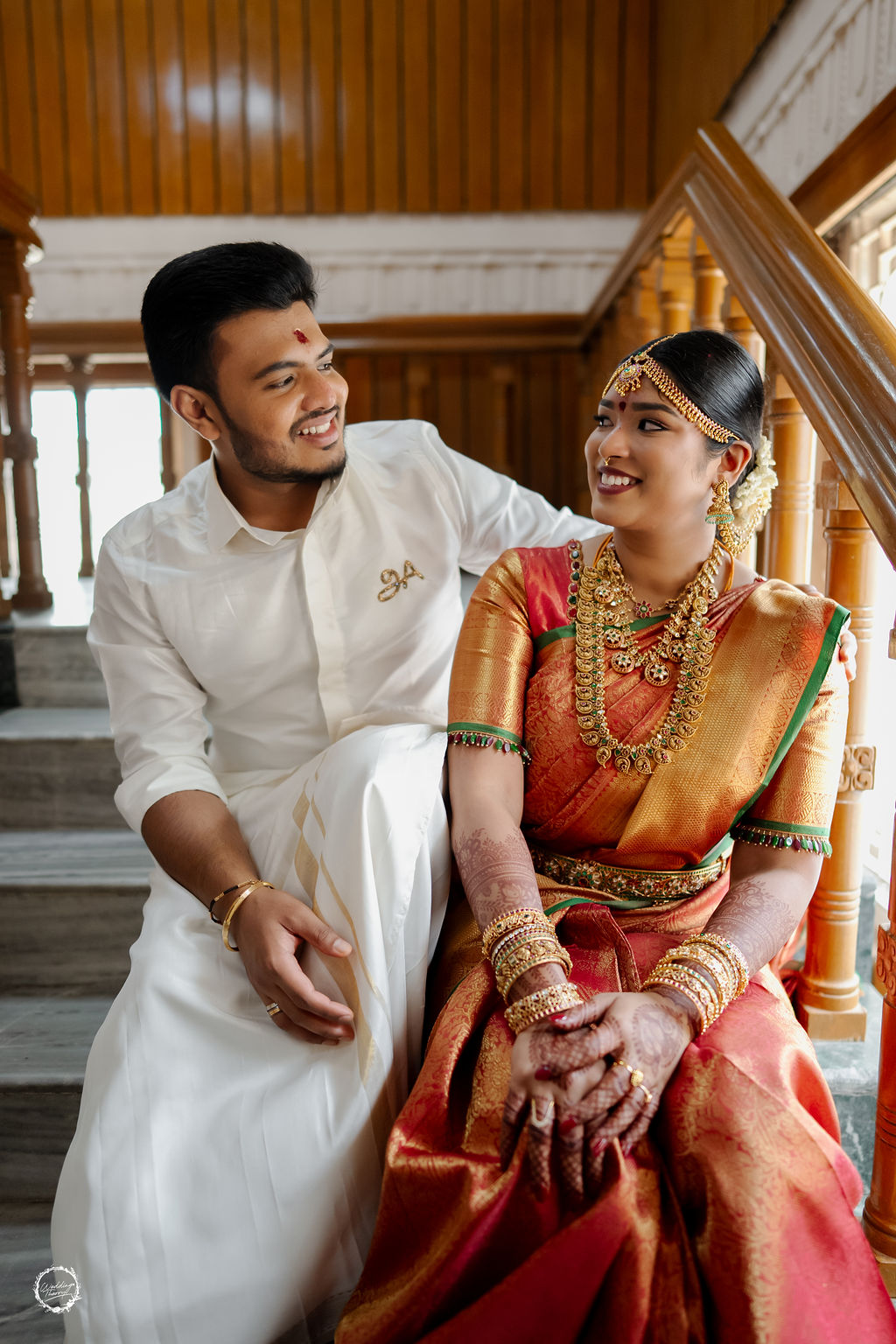
Portraits are where most albums go wrong. They become a series of stiff poses, everyone staring at the camera with the same smile. We prefer a mix: a few formal shots for the family, but mostly candid interactions.
The way your partner laughs at something you whisper. The way you lean into each other when you think no one is watching. These are the portraits you'll actually want to look at in twenty years.
The Moments People Forget to Ask For
There's a set of photos that rarely make the client's checklist but always make the final cut. These are the in-between moments, the ones that feel accidental but are actually the heart of the day.
The Hands
Hands tell a story that faces sometimes hide. The way your grandfather holds your wrist during the pheras. The way your mother's hands rest on your shoulders during the vidai. The way your partner's fingers interlace with yours when you're both exhausted at 2 a.m.
These close-ups are not just details. They are the emotional punctuation of the day.
The Laughter That Breaks Through
Weddings are heavy with ritual, and the moments of relief are precious. The inside joke between cousins during the reception. The groom's best man making him laugh during the vows. The bride's sister whispering something that makes her crack up mid-ceremony.
These are the photos that feel like your actual relationship, not the formal version of it.
The Empty Spaces
Not every photo needs a person in it. The empty mandap after the ceremony, the scattered petals on the floor, the chair where your grandmother sat. These are the photos that ground the album, that remind you of the space and the time.
They also give the eye a rest between intense moments. A good album breathes, and these shots are the exhale.
How to Plan Your Shot List Without Overplanning
The biggest mistake couples make is handing us a list of fifty must-have shots and then spending the entire day checking boxes. That's not a wedding, that's a photoshoot with catering.
Here's what we recommend instead:
- Identify the five to seven moments you absolutely cannot live without. For most couples, that's the getting-ready, the first look, the baraat, the pheras, the vidai, and a few family portraits.
- Trust your photographer to find the rest. We know where to stand, when to move, and what to look for. The more you trust us, the more present you are, and the better the photos turn out.
- Give your family a short list, not a long one. Tell them the key group shots you want, then let them enjoy the day. A family member with a list of thirty combinations will spend the whole reception rounding people up.
The album is not a checklist. It's a memory you get to hold. The best way to ensure it feels like that is to give yourself permission to be in the moment, and let the photography happen around you.
What to Cut, and Why
Just as important as what goes in is what stays out. A great album is edited with intention, not just assembled.
The Repetitive Shots
You don't need twelve photos of the same garland exchange. One strong image tells the story better than a series of near-identical ones. We pick the best of each moment and let the rest go.
The Forced Smiles
If a group shot has three people looking at the camera and one person looking at their phone, we cut it. Not because it's a bad photo, but because it doesn't serve the story. The album should feel cohesive, not like a collection of everything we shot.
The Ones That Don't Feel Like You
Some photos are technically perfect but emotionally flat. If a shot doesn't bring back a feeling, it doesn't belong. We'd rather have a slightly imperfect photo of a genuine moment than a flawless photo of a posed one.
The Final Edit Is a Conversation
Your album should feel like a collaboration, not a delivery. When we present the final selection, we want you to look through it and feel like it tells your story, not just the story of a wedding.
That means we're open to changes. If a certain aunt is missing from a family shot, we'll find her. If a moment you loved didn't make the cut, we'll talk about why and find a place for it if it works.
The goal is not to hand you a product. It's to hand you a way to remember the day the way you actually lived it, not the way a schedule or a checklist described it.