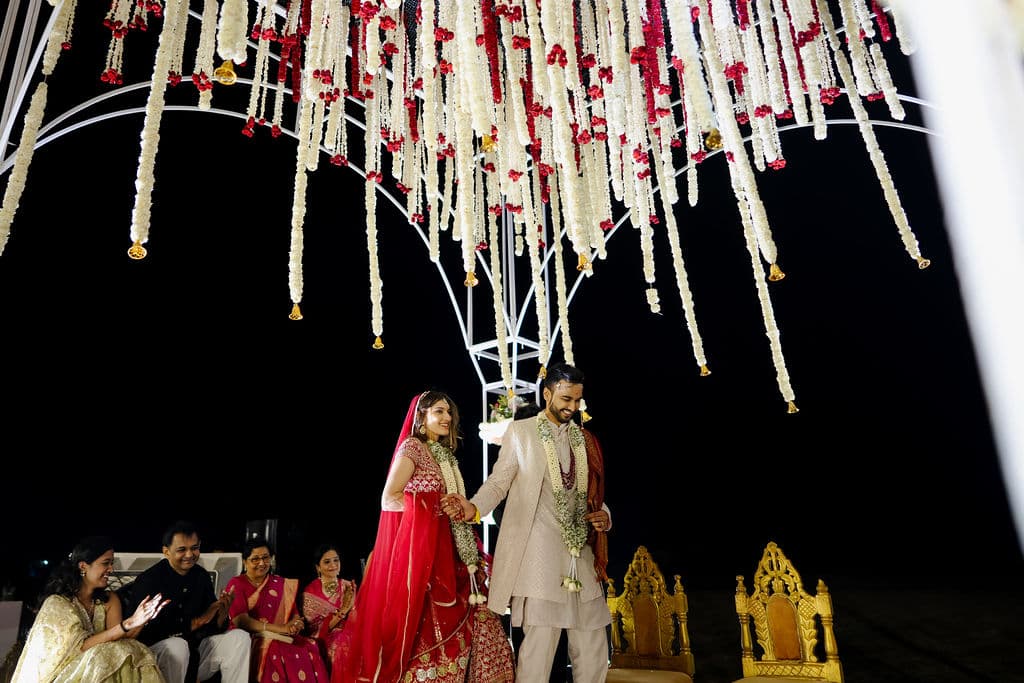
Why the Bride's Entry Is the Hardest Shot of the Day
Ask any wedding photographer which moment makes them nervous and most will not say the vows or the first kiss. They will say the entry. The bride is moving, the light is usually against you, and there is exactly one chance to get it. No second take, no repositioning, no asking her to walk in again.
That pressure is why so many entries end up looking the same: a blurry backlit silhouette, a wide shot from the back of the hall, or a forced smile caught mid-step. The moment deserved better.
This is a breakdown of how we actually shoot it, from the walkthrough the day before to the frame that ends up in the album.
Scout the Venue Before You Touch the Camera
The entry is decided long before the bride takes her first step. It is decided during the recce, when you find out what the room will actually look like at that exact hour.
Find the light source first
Walk to the entry point and ask one question: where is the light coming from? If the mandap or altar faces a window, the bride will be backlit and you will need to expose for her face, not the room. If the room is lit by chandeliers overhead, expect hard shadows under her eyes and plan a bounce or a small fill.
Most Indian venues mix daylight, tungsten, and decorative LED, which is a color temperature mess. Set a custom white balance on site rather than trusting auto.
Map the walk path and the blocking
Ask the planner or family exactly where she enters, who walks with her, and where she stops. Entries vary wildly: a father-daughter walk, a brother escort, a solo walk under a phoolon ki chadar, a bridesmaid procession ahead of her.
- Mark the exact spot she pauses, because that is where the emotion peaks.
- Note where guests will stand, since aunties will block your sightline at the worst moment.
- Check whether the aisle is wide enough for you to move backward without tripping.
If you can, agree on one clear zone with the planner where guests will not stand. This single conversation saves the shot more often than any lens choice.
Positioning Yourself for the One Shot You Cannot Miss
You get one primary angle. Everything else is a bonus, so choose the primary angle like it matters, because it does.
The three positions worth having
- Front, slightly off-axis. This is your hero frame. Stand where you can see her face and the reaction of the person waiting for her. Do not stand dead center, since you will block the guests behind you.
- Side profile. A second shooter or a second body on a tripod here catches the walk and the chadar or veil in motion.
- Back of the aisle. This gives you the scale of the room and the crowd turning to look. Useful, but rarely the frame she will frame on her wall.
Do not chase her down the aisle
Walking backward in front of a moving bride is how photographers trip over children and knock into decor. Pick your spot, plant, and let her come to you. If you need a second angle, use a second body on a tripod or a second shooter, not your own feet.
Keep the shutter speed high enough to freeze a walking subject, generally 1/250 or faster, and accept a higher ISO. A sharp frame with grain beats a clean frame with motion blur every time.
Directing Without Directing
The best entries look unposed because the photographer set up the conditions for a real moment, then got out of the way.
Brief the family, not the bride
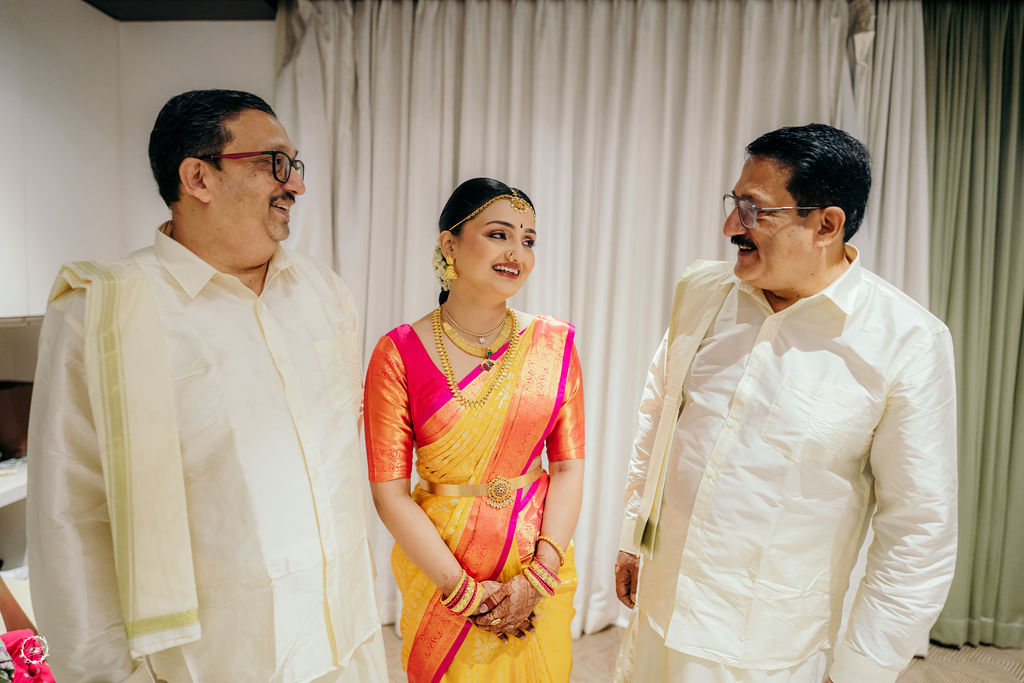
You cannot choreograph the bride in the middle of her entry. What you can do is brief the people around her beforehand. Tell the father to pause for two seconds before they start walking. Tell the brother holding the chadar to keep it slightly forward so her face stays visible. Tell the person at the end of the aisle to stay facing her.
These small instructions create the pauses where real expression happens. A held beat is where you get the look, the tear, the laugh.
Watch the hands and the eyes
The face is obvious. The story is often in the hands, gripping a father's arm, adjusting a dupatta, holding a bouquet too tightly. Frame slightly wider than you think you need so those details survive the crop.
And resist the urge to call her name. A bride who looks at the camera on her entry loses the moment she was actually having. Let her look at the person she is walking toward. That is the frame.
What Separates a Competent Entry Shot From a Memorable One
Technically correct entries are common. Memorable ones come from anticipation. You knew where she would pause, you knew which way the light would fall, and you were already there when it happened.
That is the difference between documenting an event and telling a story. If you want to see how we handle entries across different venues and traditions, look through our recent work, and you will notice the same principle in every frame: we are never chasing the moment, we are waiting for it.