
The Family Photo Wall: Why It Feels Like a Puzzle
Every Indian wedding has that moment. The photographer calls out names, and suddenly forty people are being arranged into rows, squinting into the sun, while the couple stands in the middle wondering if anyone will ever smile naturally again. The pressure is real, and it lands on you as the couple because you want your grandparents to look happy, your cousins to look present, and your parents to look proud.
But here's what most people don't realize: the chaos isn't a failure of planning. It's a failure of structure. Large Indian wedding families are not just big. They are layered, with generations, in-laws, and childhood friends who count as family. When you try to photograph that as one single group, you lose everyone's attention and patience.
The solution is not to fight the size. It's to break the group into intentional, manageable pieces that still tell the story of your whole family.
Start With the Shot List, Not the Camera
Before the wedding day, sit down with your photographer and write out a list of every combination you truly need. This is not about limiting creativity. It's about protecting your time and your family's energy.
- The full family: everyone who traveled to be there, even if it's 80 people.
- The immediate families: your parents and siblings, then your partner's parents and siblings.
- The grandparents with all grandchildren.
- The cousins, by side or all together.
- The aunts and uncles, both sides.
- The childhood friends who feel like siblings.
When you hand this list to your photographer, you are giving them permission to be efficient. They can call groups by name, move people quickly, and avoid the dreaded "let's do one more just in case" that makes everyone groan.
Your photographer should also know which combinations matter emotionally. Maybe your grandmother wants a photo with all her daughters. Maybe your father's college friends are flying in from three cities. Those specific requests belong on the list, not in the moment.
Why Order Matters More Than You Think
The sequence of shots changes how people feel. Start with the largest group while everyone is still fresh and cooperative. Then move to smaller groups, and end with the immediate family where you can take your time. If you start small, the big group will be restless by the time you call them.
Also schedule the family photos at a time when people are not hungry or overheated. Right after the ceremony, before the meal, is usually ideal. Your photographer should have a plan for shade, water, and a quick pep talk before the first shot.
The Art of Directing Forty People Without Yelling
Your photographer's job is not just to click. It's to be a gentle director who can make a crowd feel like a team. The best ones use humor, clear commands, and quick movements. They say things like, "Everyone look at the bride's brother, he's about to cry," and suddenly the whole group is laughing and looking at the same spot.
But you can help. Assign one family member, usually an aunt or a cousin who knows everyone, to be the liaison. This person can call people by name, pull in the stragglers, and keep the energy up while the photographer focuses on framing and light.
Here are a few techniques that work with large groups:
- Use height. Put grandparents on chairs, parents standing behind them, and younger cousins kneeling in front. This creates depth and ensures everyone's face is visible.
- Shoot from a slightly elevated angle. A small step ladder or a balcony can make a huge difference in how many faces you can see.
- Break the group into clusters of four or five within the frame. Instead of one straight line, have small groups turn slightly toward each other. It looks natural and feels less like a school photo.
- Take three shots per setup. One with everyone looking at the camera, one with everyone laughing at a joke, and one candid. You'll have options without asking people to hold still for ten minutes.
When the Kids Start Crying
Children are unpredictable, and that's okay. The worst thing you can do is pause the entire session to fix a crying toddler. Instead, let the photographer work around it. Shoot the adults first, then bring in the children for the last few frames. If a child is truly inconsolable, take the photo without them and plan a separate moment later. No one will notice a missing child in the big group, but they will notice a stressed-out couple.
Making the Chaos Feel Cinematic
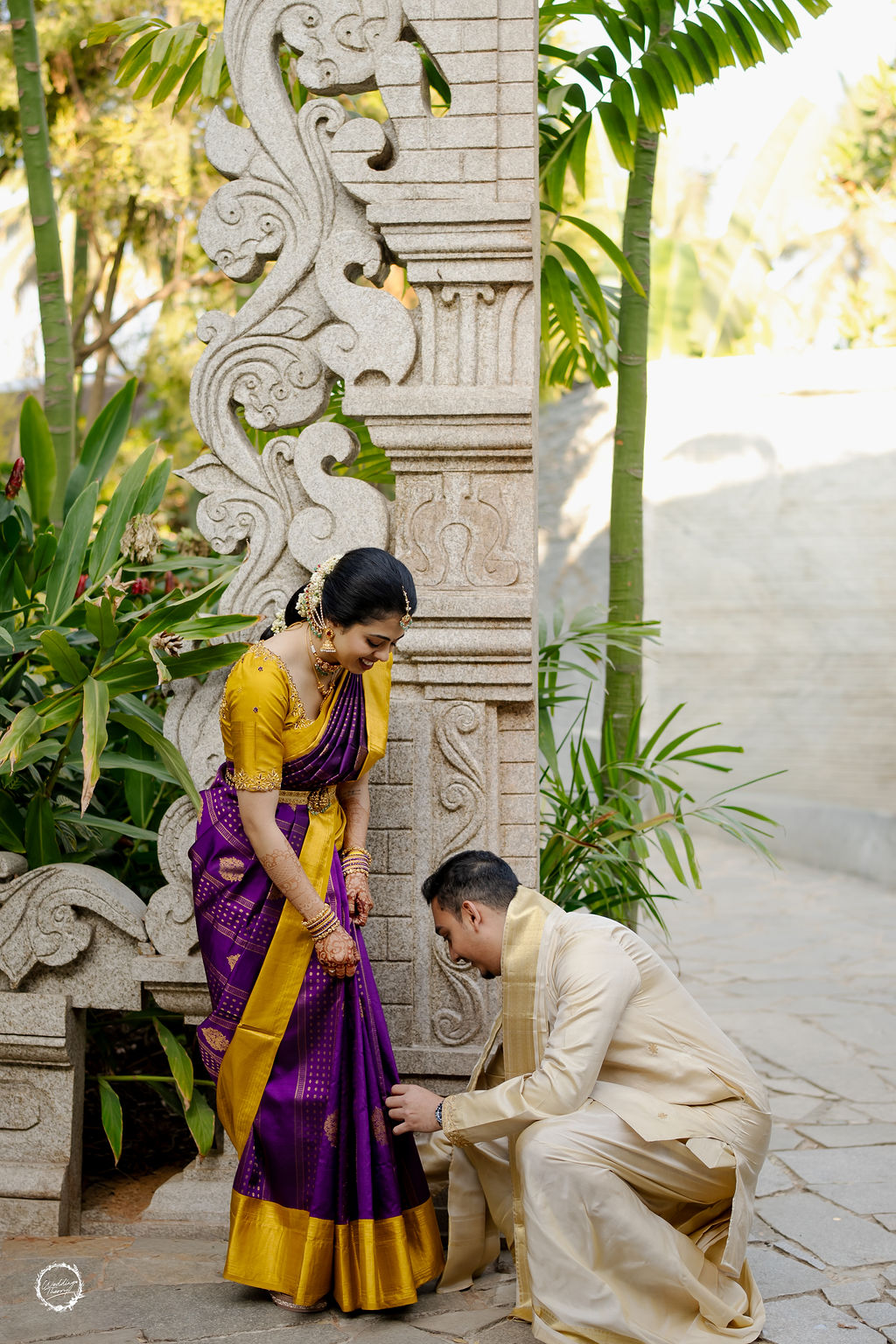
Family photos don't have to be stiff. The best ones capture the energy of your actual family, which in India is rarely quiet. Encourage your photographer to mix posed shots with candid moments. While everyone is being arranged, they should also be snapping photos of the grandmother adjusting the bride's dupatta, the cousins whispering, the uncle fixing his turban.
These candids are often the images you'll frame later, because they show the love and humor that a formal pose can hide. Ask your photographer to spend ten minutes just documenting the in-between, before and after the posed set. That's where the real story lives.
Also think about location. A large group can feel overwhelming in a small room. Choose an outdoor space with clean background, or a wide staircase, or a courtyard with enough room for everyone to spread out. Your photographer should scout the venue ahead of time and mark the best spots for large groups, with good light and no pillars blocking faces.
What to Do When Someone Refuses to Be Photographed
It happens. An elderly relative who doesn't like their photo, a teenage cousin who's shy, a guest who arrived late and doesn't want to interrupt. The polite move is to not force it. A photograph taken under pressure will show in the faces. Instead, let your photographer take a casual shot of that person from a distance, or wait until they're laughing with someone else and capture that.
You can also ask your photographer to do a "walk-through" shot, where the group walks toward the camera in a loose formation. This feels less intimidating and often catches reluctant people smiling because they're moving.
At the end of the day, the goal is not to have every single person in every frame. It's to have a set of images that, when you look at them in ten years, remind you of the warmth and noise of your wedding. A missing uncle in one photo is fine if you have another photo with him laughing at the edge of the frame.
The Final Frame: Letting Go of Perfection
Large family photos are a negotiation between what you imagine and what is possible. You will not get a perfectly symmetrical shot of 60 people all smiling with their eyes open. But you will get something better: a real moment, with real people, who love you.
Trust your photographer to make the calls, and trust your family to show up as they are. The photos that matter are the ones where your grandfather is adjusting his glasses, your mother is holding your hand, and your cousins are laughing at something off-camera. That's your family. That's the story.
When you look back, you won't remember the 15 minutes of herding. You'll remember the way your grandmother's sari shimmered in the light, and how your father stood a little taller next to his brothers. That's what the camera is really for.