
The Baraat Is Not a Photo Op. It's a Moving Story.
You hear the dhol before you see them. The ground vibrates. A cousin in a sherwani breaks into an impromptu bhangra. The groom, usually composed, is grinning like a kid. This is the baraat, and it's the first real test of a wedding photographer's instincts.
Most coverage treats it as a parade: line up, shoot the procession, get the wide shot. That approach misses what makes a baraat worth photographing. It's chaos with a heartbeat, and your job is to find the story inside it.
Before You Raise the Camera: Anticipate the Chaos
Baraats are loud, crowded, and unpredictable. The best images come from knowing what's about to happen before it does.
Scout the route and light
Arrive early. Walk the path from the starting point to the venue. Note where the sun will be, where shadows fall, and where the crowd will bottleneck. A narrow lane means tight quarters; an open ground means you can back up for wider shots. If the baraat moves into a shaded area, you'll need to adjust your settings fast.
Identify the key players
The groom is obvious, but the story lives in the periphery. Find the mother adjusting his sehra, the best friend who's been practicing his dance moves for weeks, the grandfather watching from a chair with a proud smile. Knowing who matters helps you anticipate moments.
Protect your gear and yourself
Baraats are physical. People will bump into you. Dancers will swing arms. Keep your camera close and your movements deliberate. A second body with a wider lens saves you from swapping lenses in a dust cloud. Wear shoes you can move in. You're not a spectator; you're part of the flow.
What to Actually Shoot (and When)
The baraat unfolds in phases. Each has its own energy and its own photographic opportunities.
The gathering
Before the procession starts, there's a lull. Use it. Capture the groom's final moments with his family, the nervous laughter, the last-minute adjustments. These quiet frames anchor the louder ones that follow.
The procession
Once the dhol kicks in, everything accelerates. This is where you work the edges. Get ahead of the group and turn back to shoot faces coming toward you. Drop low for a worm's-eye view of dancing feet. Find a balcony or a wall for a high angle that shows the scale. Mix wide shots that establish the scene with tight shots that isolate emotion.
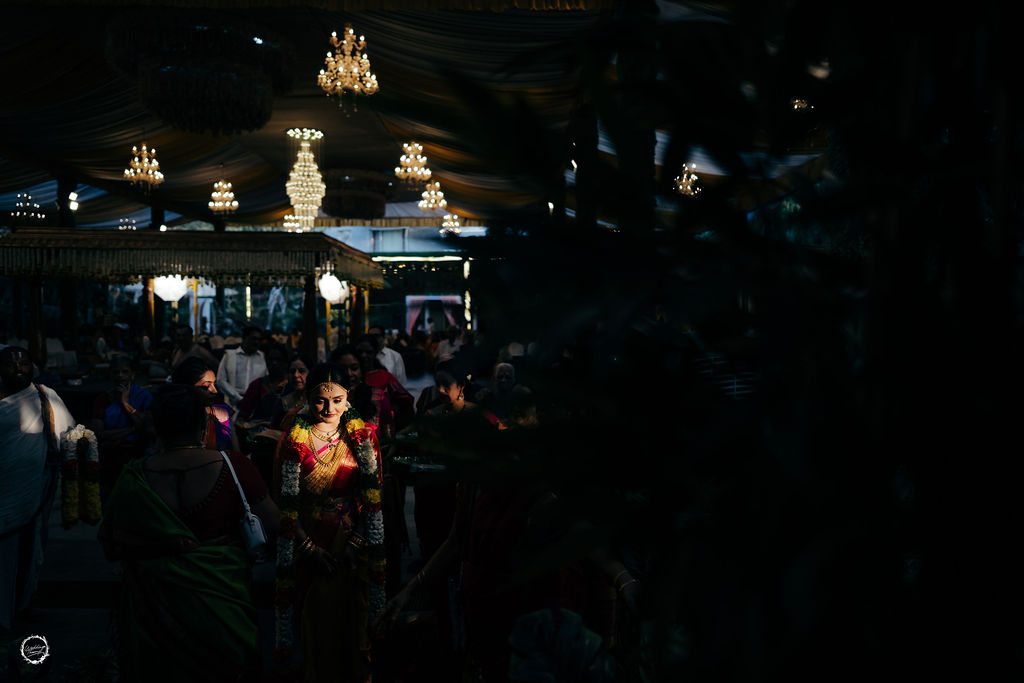
Don't forget the details: the embroidered mojari, the flower petals in the air, the dhol player's hands. These are the textures that make the story tactile.
The arrival
As the baraat reaches the venue, the energy shifts. There's a final burst of dancing, then a pause as the groom prepares to enter. This transition is gold. The contrast between the wild procession and the quiet anticipation is what makes the baraat feel like a complete narrative.
Technical Settings for a Moving Crowd
You can't control a baraat, but you can control your camera. These settings keep you ready for anything.
- Shutter speed: 1/500 or faster to freeze dancing feet and flying petals. If you want motion blur for a sense of movement, drop to 1/60 and pan with the subject.
- Aperture: f/2.8 to f/4 for separation in crowded scenes, but stop down to f/5.6 or f/8 when you need more depth of field for group shots.
- ISO: Auto ISO with a cap at 6400. Modern cameras handle high ISOs well, and a noisy shot is better than a blurry one.
- Focus: Continuous AF with eye detection if you have it. For fast action, zone focus or pre-focus on a spot and wait for the moment.
- Flash: Use it sparingly. A bare flash kills the ambient mood. If you must, bounce it or use a diffuser, and dial down the power.
The Moments Everyone Else Misses
While others chase the groom, look for these frames. They'll set your work apart.
The quiet observers
An aunt wiping a tear. A child covering her ears from the dhol. The venue staff peeking through a door. These are the human asides that give the baraat context.
The interactions
The groom's friends lifting him on their shoulders. His mother straightening his collar. Two cousins sharing a quick hug before the dancing resumes. These connections are the heart of the event.
The environment
The street sign, the parked cars, the string lights overhead. Including these details grounds the baraat in a real place and time. They're the visual equivalent of a date stamp, but far more evocative.
Editing the Baraat: Keep the Energy
Your edit should feel like the baraat itself: dynamic, layered, and full of life. Resist the urge to over-process. Warm tones and natural contrast work best. Sequence your images to tell a story: start with the gathering, build through the procession, and end with the arrival. Mix wide, medium, and tight shots to create rhythm. And don't be afraid to include a slightly imperfect frame if it captures the spirit of the moment. Technical perfection matters less than emotional truth.
The baraat is a gift for photographers who embrace the chaos. It's unpredictable, loud, and messy, and that's exactly why it's so rewarding. Put yourself in the middle of it, stay alert, and let the story unfold.