
The Smile Problem Nobody Talks About
You've seen the photos. The couple mid-laugh, heads thrown back, eyes crinkled. The bridesmaids in genuine hysterics over something the groom's cousin just said. Those images feel alive in a way a posed portrait never does. But here's what most people don't realize: those moments are not accidents. They're engineered.
Every photographer who delivers those candid-feeling shots has a system. It's not about telling better jokes or waiting for magic. It's about understanding how comfort, timing, and direction actually work on a wedding day. The good news is you can plan for them.
This isn't a guide to fake a smile. It's a guide to creating the conditions where real ones show up.
Why Most Wedding Smiles Look Stiff
The root cause of a forced smile is usually one of three things: nerves, fatigue, or uncertainty. When you're standing in front of a camera and someone says "smile," your brain goes into performance mode. You're thinking about how you look, not how you feel. The result is a tight mouth and wide eyes that read as panic.
There's also the physical side. After hours of greeting guests and holding expressions, your face gets tired. The muscles around your mouth and eyes stop responding naturally. That's why the best smiles often happen in the first hour of the day, before the marathon begins.
And then there's the uncertainty of not knowing what to do with your hands, where to look, or whether you're standing at the right angle. That mental noise shows up in your face.
The Photographer's Role in Your Smile
A skilled photographer doesn't just point and shoot. They direct your attention away from the lens. They give you something to react to, a question to answer, a person to look at. Your job is to trust that direction and let go of the idea that you need to perform.
If you're working with a photographer who just says "smile" and snaps, you'll get what you get. The genuine ones come from photographers who treat the session like a conversation, not a portrait sitting.
Three Techniques That Actually Produce Real Smiles
These aren't tricks. They're psychological and physical adjustments that make a real smile more likely. Try them during your engagement shoot, and you'll see the difference immediately.
1. Move Instead of Pose
Stillness creates tension. When you're frozen in place, your brain focuses on the camera. When you're walking, swaying, or adjusting your partner's boutonniere, you forget the lens is there. Motion gives your face something to do besides hold a position.
Ask your photographer to have you walk toward each other, spin slowly, or adjust each other's clothing. Those small movements break the freeze and let natural expressions slip through. The best smiles in wedding albums are almost always captured mid-motion.
2. Talk About Something Real
Your photographer can't know what makes you laugh, but you do. Before the session, share a few inside jokes or stories that reliably get you both giggling. Then, during the shoot, let those come up naturally. When you're genuinely amused, your smile reaches your eyes, and that's the difference between a posed grin and a real one.
It also helps to have your photographer ask questions that require thought, not just yes or no answers. "What's the worst date you ever went on?" produces a different face than "Are you excited?" The first one makes you recall a story, and your face follows the memory.
3. Give Your Eyes a Job
Smiles aren't just about the mouth. The eyes carry the emotion. If you're staring blankly at the camera, the smile dies before it reaches your face. Instead, look at your partner like you're about to tell them a secret. Look at the light. Look at a point just past the photographer's shoulder and imagine something wonderful there.
When your eyes have a focal point, your face relaxes. The smile becomes a response to what you're seeing, not an instruction you're following.
Planning Your Day for Natural Smiles
You can't control every moment, but you can set up the day so genuine expressions are more likely. This starts with your timeline and your mindset.
Schedule Buffer Time
Rushing is the enemy of authenticity. If you're constantly worried about falling behind, that tension shows in your face. Build extra time into your photography slots, especially for the couple's portraits. Ten extra minutes of unhurried time can be the difference between stiff and relaxed.
It's also worth scheduling your portraits at a time of day when you're least likely to be tired. Late afternoon light is beautiful, but if you've been up since 5 a.m. and haven't eaten, your energy will be low. A quick snack and a five-minute sit-down before the session does wonders.
Keep Your Inner Circle Close
Having a few people nearby who make you laugh can loosen you up before the camera comes out. A bridesmaid who knows your sense of humor, a brother who can crack a joke at the right moment. These people are your emotional anchors. They remind you that this is a celebration, not a performance.
Just be careful not to let the crowd grow too large. The more people watching, the more self-conscious you become. A small, trusted group works best.
Trust Your Photographer's Direction
If you've chosen well, your photographer has done this hundreds of times. They know what works. When they ask you to do something that feels awkward, like whispering in your partner's ear or looking at each other's foreheads, trust it. The awkwardness is often the gateway to a genuine laugh.
Resist the urge to check the back of the camera after every shot. That breaks the flow and puts you back in your head. Let the photographer guide you, and save the review for later.
What to Do When the Smile Just Isn't Coming
There will be moments when you feel tight. Your face is doing what you ask, but it doesn't feel real. This happens to everyone. The fix is not to try harder. It's to change the context.
Step away from the camera for a minute. Walk around. Look at the sky. Have a sip of water. Sometimes the best thing you can do is stop trying to smile and just breathe. When you return, the pressure is gone, and the real expression follows.
You can also ask your photographer to shoot from a different angle or distance. A change in perspective often resets your brain. And if all else fails, remember that the most honest photos are sometimes the ones where you're not smiling at all. A quiet, thoughtful look can be just as powerful as a laugh.
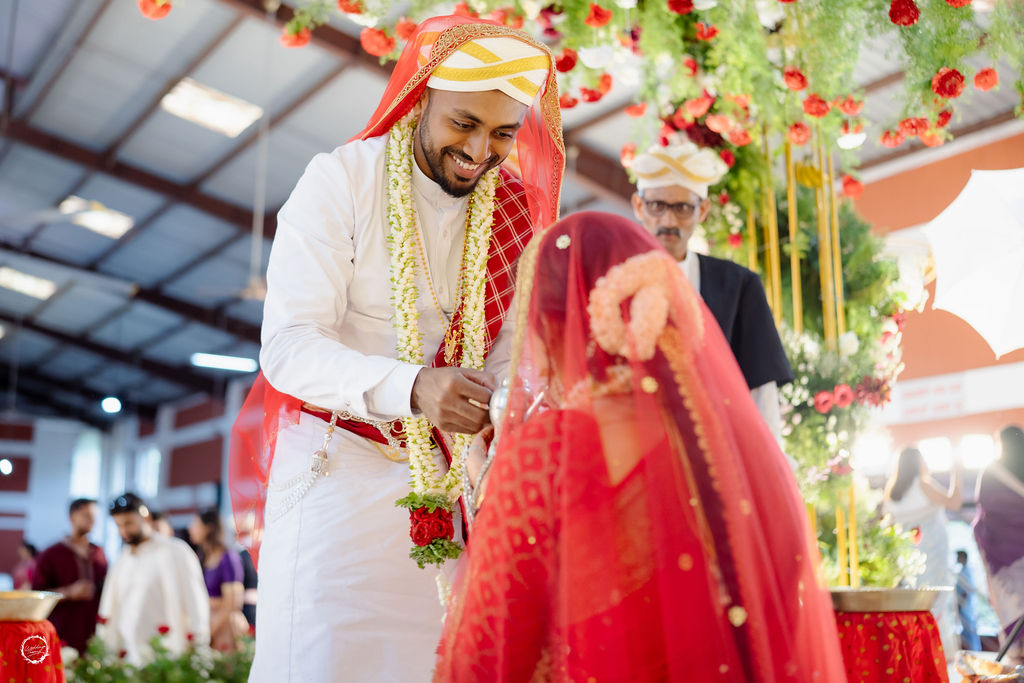
The genuine smile you're hoping for isn't a performance skill. It's a byproduct of feeling safe, present, and connected. When you stop worrying about how you look and start paying attention to the person beside you, the smile takes care of itself.
Talk to your photographer about their approach to directing. Ask how they handle couples who are nervous or tired. A good photographer will have answers that reassure you. And when you find someone who makes you feel at ease, hold onto them. That comfort is what will show up in every frame.
Your wedding photos should look like you, not like a version of you trying to smile on cue. Trust the process, give yourself permission to be real, and the rest will follow.