The Question Behind the Question
Most couples start by comparing portfolios and prices. But the real question is quieter: who do you want standing closest to you during the most vulnerable moments of your day? A single photographer moves through your wedding like a guest with a camera. A team moves like a production unit. Both can deliver stunning images. The difference is in what you feel during the day and what you see in the final gallery.
This decision affects more than your budget. It shapes how much of your wedding you actually experience, how comfortable your family feels, and how many angles of your grandmother's tears make it into the album. Let's break down what actually changes when you add a second shooter or a full team.
What a Single Photographer Gives You
One photographer means one perspective, one pair of eyes, one artistic voice. That consistency can be a gift. The images carry a singular vision from morning prep to the last dance. There's no negotiation between two styles, no second shooter shooting a different color grade or framing everything wider than your lead photographer would.
There's also an intimacy to it. A single photographer becomes part of your day, not a crew. They learn your family's names, notice the way your mother laughs, and anticipate your cousin's speech before it happens. That closeness often produces portraits that feel less posed and more like stolen moments.
When One Is Enough
If your wedding is small, under 80 guests, and the timeline is relaxed, one photographer can cover it thoroughly. You're not asking them to be in two places at once because there aren't two places happening. The ceremony and reception are in the same venue, the gap between events is short, and the moments you care about happen sequentially, not simultaneously.
One photographer also works well if you have a clear priority list. Maybe you care most about the couple portraits and the ceremony. You're less interested in hours of reception candids. A single shooter can pour all their energy into those few hours, and the result is often more focused than a team splitting their attention.
What a Team Adds
A second photographer changes the geometry of your wedding. While one shooter stays with you during getting ready, the other captures your partner's morning. While one stands at the back of the aisle for the wide shot, the other is at the front catching the look on your face as the doors open. That dual coverage is the most obvious benefit, but it's not the only one.
A team also brings practical advantages. One photographer can handle the family formals while the other roams for candids. One can stay with the couple during golden hour portraits while the other covers the cocktail hour. You get more images overall, but more importantly, you get more variety in perspective and more coverage of moments that would otherwise be missed.
The Hidden Value of a Second Shooter
The second shooter isn't just a backup. They're a different set of instincts. Your lead photographer might be drawn to wide environmental shots. The second might excel at tight details, the clinking glasses, the hands holding, the tears wiped away. Together they create a fuller story than either could alone.
There's also the safety net factor. Cameras fail, memory cards corrupt, moments don't repeat. A team means if one photographer misses a moment, the other likely caught it. That redundancy is quiet insurance for the most important day of your life.
The Real Difference: Simultaneous Moments
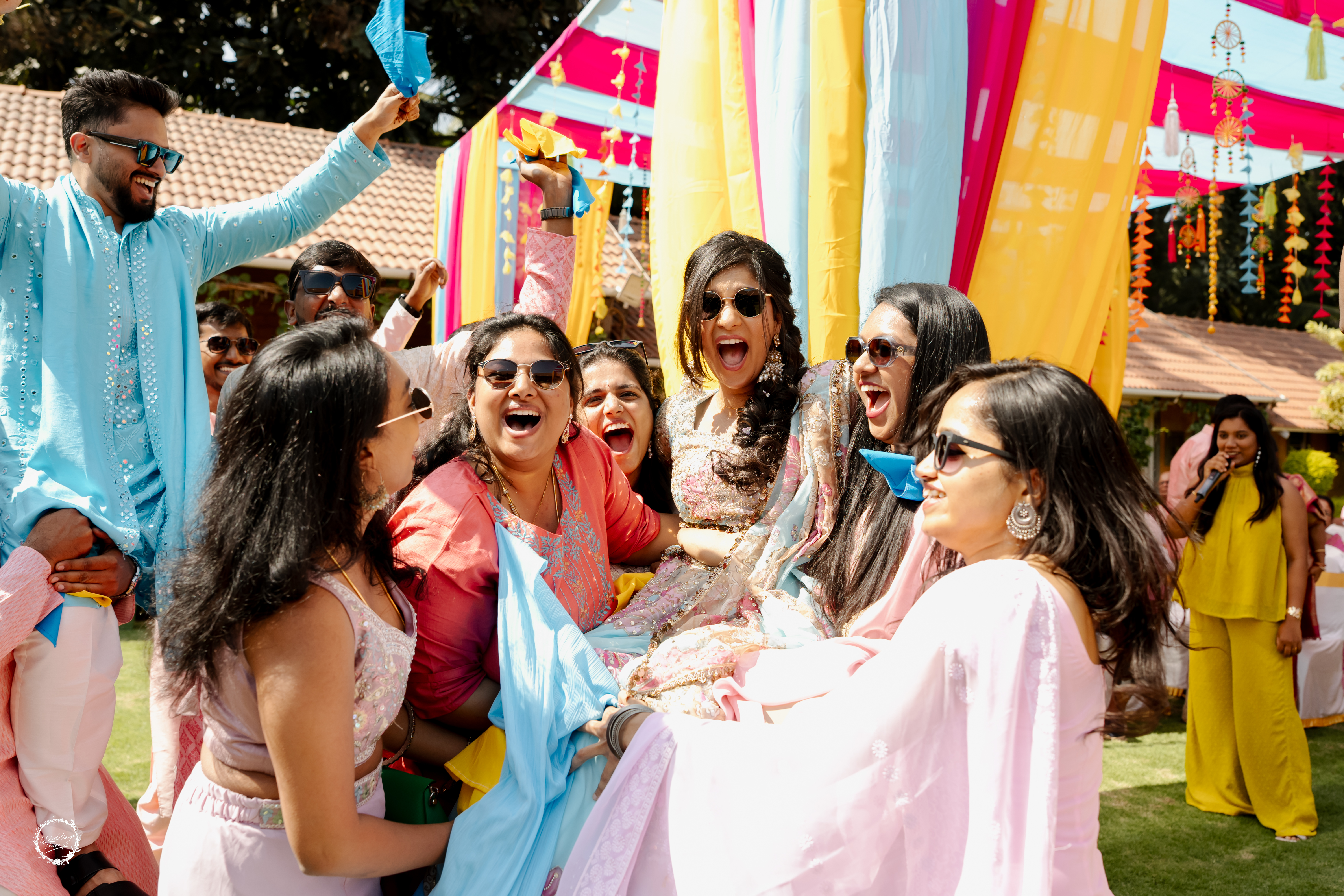
Think about your timeline. During the ceremony, while you're exchanging vows, your partner's mother is crying in the third row. Your father is adjusting his tie. Your niece is fidgeting. A single photographer has to choose which of these to frame. A team can capture all of them.
This becomes even more critical during getting ready. The groom's reaction to the first look, the bride's mother zipping her dress, the groomsmen's toast before the ceremony. These happen at the same time in different rooms. One photographer physically cannot be in both places. A team can.
If you imagine your wedding album as a narrative, a single photographer gives you one thread of that story. A team gives you the whole tapestry, the simultaneous reactions, the parallel emotions, the full picture of a day that never stops moving.
How to Decide Based on Your Wedding
Start with your venue. If the ceremony and reception are in different locations, you need coverage during the travel time. A single photographer can manage this, but they'll lose the chance to capture both the exit and the entrance. A team splits up, one covering the departure, the other arriving early at the reception venue.
Next, consider your guest count. With more than 120 guests, there are simply too many faces and moments for one person to capture. You'll end up with a gallery that feels incomplete, missing your college roommate's toast or your aunt's dance with your uncle. A team ensures no one who matters is left out.
Finally, think about your own comfort level. Some couples feel self-conscious with a camera on them. A single photographer can blend in more easily. Others thrive on the energy of a crew. If you're someone who enjoys being the center of attention, a team adds a sense of occasion that a single shooter can't replicate.
A Practical Checklist
- Guest count over 120: team recommended
- Ceremony and reception at different venues: team recommended
- Getting ready locations far apart: team recommended
- You want extensive reception candids: team recommended
- You value a single artistic voice above all: one photographer
- Your budget is tight and your wedding is small: one photographer
- You hate being photographed: one photographer who you trust completely
The Budget Reality
A team costs more, usually 40 to 60 percent more than a single photographer. That's not just for the extra camera. It's for the second person's time, travel, and expertise. But before you rule it out, ask what you're trading. A team might mean you skip the videographer because the photos tell the full story. Or it might mean you trim the floral budget because you realize the images matter more to you than the centerpieces.
The right choice isn't about what's more expensive. It's about what your wedding actually needs. A small, intimate ceremony with 40 guests and one venue doesn't need a team. A 200-guest wedding with a church ceremony and a ballroom reception absolutely does. Match the coverage to the scale and complexity of your day.
Making the Call
Talk to your photographer about your timeline and your priorities. A good photographer will be honest about whether you need a second shooter. If they recommend a team, trust that they're thinking about the gaps in coverage, not just their profit margin. If they say one is enough, ask them to walk you through how they'll handle the moments that overlap.
Then think about what you'll feel looking at your gallery ten years from now. Will you wish you had more shots of your grandmother crying during the toast? Will you regret not having a photo of your partner's face when they first saw you? Those are the moments that decide this question, not the price tag.
Whichever you choose, the goal is the same: a complete, honest record of a day you'll only live once. Choose the option that gives you the fullest story, and you won't regret it.