
The Second Shooter Question
Most couples booking a wedding photographer focus on the lead shooter's portfolio, style, and personality. That makes sense. But there's a quieter decision hiding in the contract, one that shapes how your day gets documented in ways you won't notice until you're looking back at the gallery: whether to add a second shooter.
It's a line item that can feel like an upsell, another expense on a list that's already long. But for certain weddings, it's the difference between a complete story and a one-sided retelling. Let's talk about what a second shooter actually does, and how to know if you need one.
What a Second Shooter Actually Does
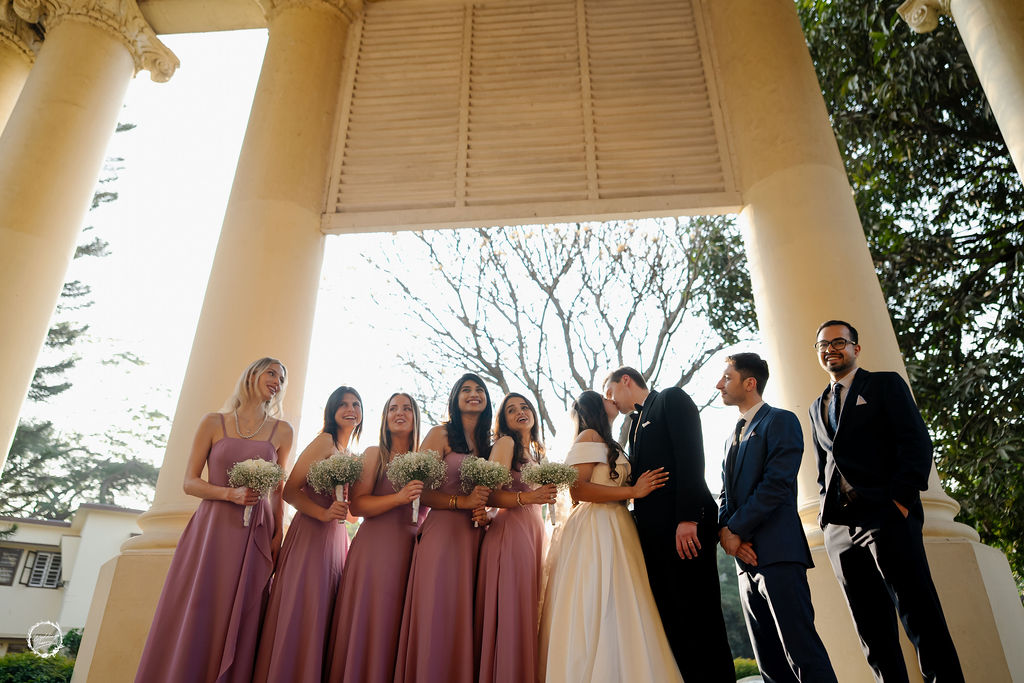
At its core, a second shooter is another photographer working alongside your lead photographer. They don't just take extra photos. They cover a different angle, a different room, a different moment. While your lead is focused on you during the first look, the second is capturing your partner's reaction from across the courtyard. While your lead is documenting the ceremony from the aisle, the second is on the other side, catching your grandmother's tears during the vows.
This division of attention means no single moment gets sacrificed for another. When the couple is in one place and the guests are in another, one photographer can't be in both. A second shooter makes that possible.
They also provide practical backup. If your lead's camera fails, the second's camera doesn't. If your lead is pulled aside by a family member for an urgent question, the second keeps shooting. It's a safety net that rarely gets mentioned in the sales pitch but matters enormously on the day.
When a Second Shooter Is Worth It
Large Weddings with Split Attention
If you're inviting more than 150 guests, chances are you won't be in the same room as everyone at the same time. During cocktail hour, while you're taking portraits, the second shooter can capture your guests mingling, laughing, and toasting in your absence. Those candid moments often become the ones you treasure most, the ones you never saw happen.
At the reception, the second shooter can cover the dance floor from a different angle while your lead focuses on you and your partner. They can catch the spontaneous group photo, the uncle doing the worm, the kids stealing cake. Without a second shooter, those moments either get missed or force your lead to choose between you and the chaos.
Weddings with Two Locations
If your getting-ready spaces are in different places, or if you're having a separate ceremony and reception venue, a second shooter becomes almost essential. While your lead is with you during hair and makeup, the second can be with your partner as they put on their suit, share a quiet moment with their parents, or pace nervously. This parallel coverage creates a richer narrative, showing both sides of the anticipation.
Similarly, if your ceremony and reception are far apart, one photographer can travel ahead to capture the reception setup, the table details, the lighting, before guests arrive. That's coverage you'd otherwise lose.
When You Want a Complete Story
Some couples care primarily about their own portraits and the formal family shots. If that's you, a second shooter might be unnecessary. But if you want a documentary-style record of the entire day, including the moments you weren't part of, a second shooter is the way to get it.
Think about your favorite wedding photos from friends or online. The ones that feel alive often aren't the posed ones. They're the candid reactions, the stolen glances, the quiet exchanges between guests. A second shooter multiplies those opportunities.
When a Second Shooter Isn't Needed
If your wedding is small, under 50 guests, and everything happens in one location, a single skilled photographer can cover it thoroughly. The pace is slower, the moments are more contained, and the need for split coverage drops significantly.
If your budget is tight, and adding a second shooter means cutting something else you care about, like a videographer or a better album, consider whether the second shooter is truly necessary. Sometimes the trade-off isn't worth it.
If you're having an unplugged ceremony and a very structured reception with few free-form dancing moments, the extra coverage might not add much. A second shooter thrives on spontaneity and parallel action. If your day is highly choreographed, you might not need that.
How to Choose a Second Shooter
If you decide to add a second shooter, ask your photographer about who they typically work with. Is it someone they've partnered with before, or a rotating list of freelancers? A consistent second shooter who knows your lead's style and workflow will deliver more cohesive results than someone new to the team.
Ask to see full galleries from weddings where a second shooter was used. Look for consistency in editing and coverage. You want both photographers' work to blend seamlessly, so you can't tell which images came from which camera.
Clarify the logistics. Will the second shooter be present for the entire day, or only during certain hours? Some packages include a second shooter for the full day, others only for the ceremony and reception. Know what you're paying for.
Finally, trust your gut. If your lead photographer recommends against a second shooter for your specific wedding, listen. They might know that your day's flow doesn't require one, and they're saving you money rather than padding their own invoice.
The Bottom Line
A second shooter isn't a luxury for every wedding. It's a practical tool for certain situations, a way to ensure no moment goes undocumented. If your wedding is large, split across locations, or you simply want a fuller story, it's worth the investment. If your wedding is small and contained, you might be fine without it.
The right answer depends on your day, your priorities, and your budget. Talk to your photographer honestly about what you envision. A good photographer will help you decide, not upsell you. And if you do add a second shooter, you'll likely find that the extra coverage pays for itself in the moments you never knew you were missing.