
Why the Gap Between Events Matters More Than You Think
You have the haldi in the morning, the sangeet at night, and the wedding the next day. The schedule looks fine on paper. But what nobody tells you is that the hours between events are where the day either breathes or breaks.
Most couples plan back-to-back ceremonies because they want to keep the momentum going. They worry that gaps will feel empty or that guests will drift away. The opposite is usually true. The gap is not dead time. It is the buffer that protects your energy, your makeup, your family's nerves, and your photographer's ability to actually create something beautiful.
When we shoot weddings, the difference between a relaxed couple and a frazzled one almost always comes down to how much space they left between the rituals. A rushed timeline shows up in the photos. Tight jaws, tired eyes, forced smiles. A generous timeline shows up too. In the laughter, the stolen moments, the portraits that feel like the two of you are the only people in the room.
What the Standard Timeline Gets Wrong
The typical Indian wedding itinerary is built around the priest's availability and the caterer's schedule, not around the people actually getting married. Ceremonies are stacked with barely enough time to change outfits, let alone eat or rest.
Here is what usually happens. The haldi ends at noon. The sangeet starts at six. In between, there is a six-hour stretch that everyone assumes will take care of itself. The couple thinks they will nap. The families think they will coordinate. The photographers think they will shoot the decor. In reality, six hours vanish in a blur of phone calls, outfit changes, and unresolved logistics.
The problem is not the length of the gap. It is that nobody plans what happens inside it.
The Hidden Costs of a Tight Schedule
When events are squeezed too close together, you pay for it in ways you do not expect. Makeup gets rushed, and it shows in photos. The couple skips lunch, and by the evening ceremony their energy dips visibly. Family members who need to be in two places at once start making decisions under stress, which leads to small conflicts that linger.
For us as photographers, a tight timeline means we are always chasing the light or the moment instead of waiting for it. We end up shooting portraits in harsh midday sun because that is the only slot available. We miss the quiet exchange between the bride and her grandmother because we are already setting up for the next shot.
The fix is not to add more hours. It is to decide what the gap is for, and then protect that purpose.
How Much Time Each Type of Gap Actually Needs
There is no single number that works for every wedding. But there are reliable ranges based on what the gap is supposed to accomplish.
- Between haldi and sangeet: Four to six hours. This is the longest break of the wedding. It needs to cover travel, a real meal, rest, and a full outfit change. If the venues are far apart, lean toward six.
- Between sangeet and wedding morning: Eight to ten hours of sleep, realistically. If the sangeet runs late, protect the morning. Do not schedule an early puja just because it is traditional.
- Between wedding ceremony and reception: Two to three hours. This is for the outfit change, a quick bite, and a moment to sit down. Any less and the couple walks into the reception already drained.
- Between mehndi and any evening event: Three to four hours. Mehndi is meant to be relaxed. Rushing it defeats the purpose.
These ranges assume you have control over the schedule. In many families, the elders set the muhurat and the caterer sets the meal times. You work around those. But within the fixed points, you almost always have more flexibility than you think.
How to Use the Gap So It Actually Helps
A gap only works if you plan what happens inside it. Here is what we recommend to every couple we shoot.
First, schedule a real meal. Not a plate of appetizers while standing. A seated meal with your immediate family, away from the crowd. This is the only time you will all be together before the chaos of the evening.
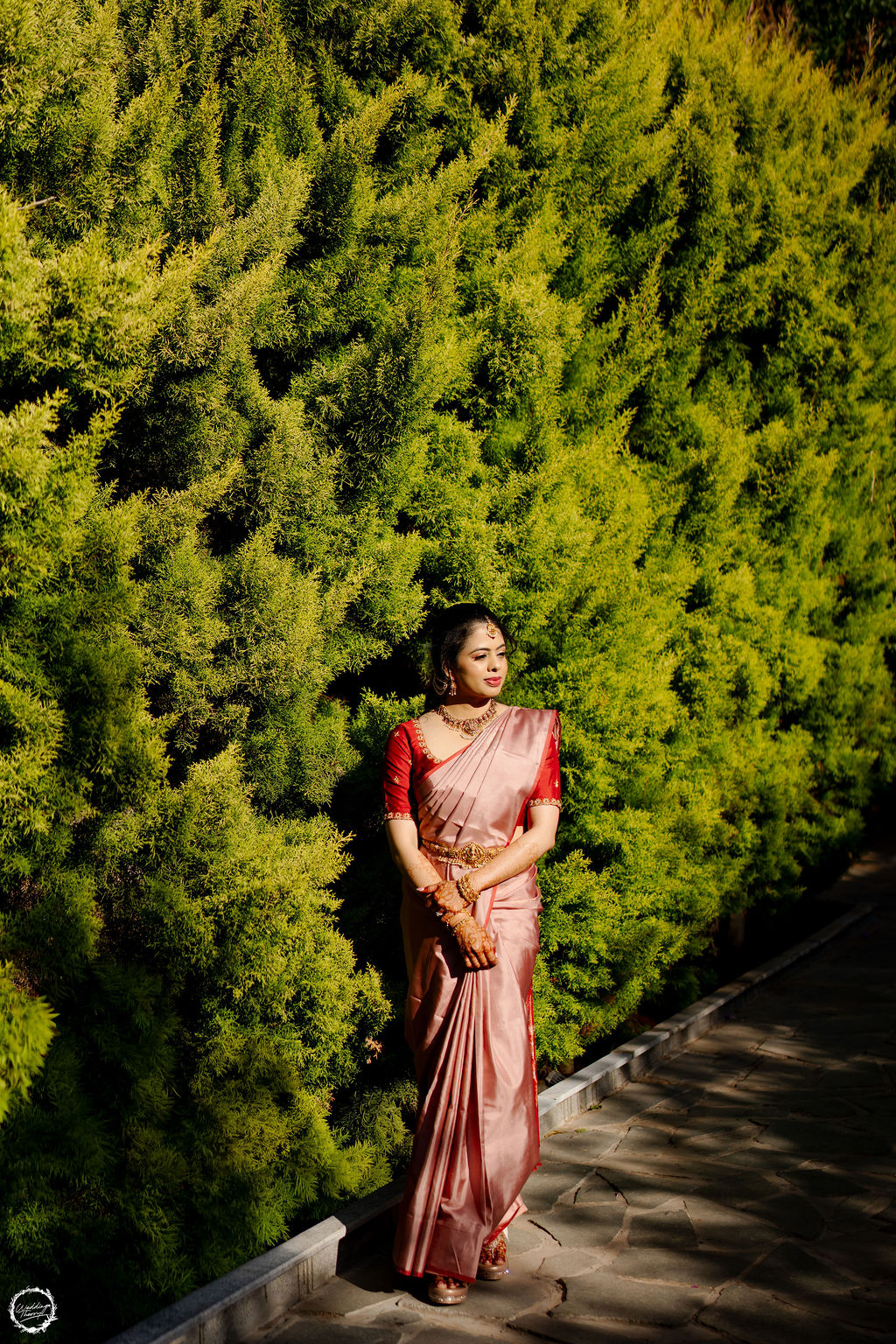
Second, block thirty minutes for portraits. This is the window where we get the best shots of the two of you, the ones you will actually frame. If you leave this to chance, it will not happen. The light is better in the late afternoon anyway.
Third, build in a buffer for the unexpected. A sari that needs re-pinning, a guest who needs help, a phone call that cannot wait. If your schedule has zero slack, any small hiccup ripples through everything.
Fourth, and this is the one most couples forget, give yourself ten minutes to sit alone with your partner. Not to talk logistics. Just to be together. That moment will carry you through the night.
Signs Your Gap Is Too Short
You will not always know in advance. But there are clear signals that the timeline is too tight. If you see any of these during planning, add time.
- You are cutting your meal to make the next event.
- Your makeup artist says she needs more time than you have given her.
- You are planning to change outfits in under twenty minutes.
- Your photographer asks for a portrait window and you cannot find one.
- You feel anxious just looking at the schedule.
Trust those signals. A wedding is not a production where everything must run on the second. It is a series of human moments, and humans need space.
What to Do When the Family Wants Everything Tighter
This is the real challenge. The elders often believe that a packed schedule shows respect for the rituals and the guests. They may push back on long gaps, worried that people will get bored or leave.
The counterargument is not about your comfort. It is about the quality of the ceremony itself. A rushed puja is not more respectful. It is more stressful. A bride who has not eaten is not more present. She is more likely to faint during the phera.
Frame it as a practical concern, not a personal preference. Tell your family that the photographer needs specific light for the portraits, that the makeup artist has a hard stop, that the caterer needs time to reset the hall. Concrete reasons land better than emotional ones.
If they still resist, offer a compromise. Keep the ceremony times fixed but add buffer between them. Or move the reception earlier so the evening ends at a reasonable hour. The goal is not a perfect schedule. It is a workable one that leaves room for the unexpected.
The One Gap You Should Never Skip
Between the wedding ceremony and the reception, every couple we have ever shot has needed at least two hours. This is the moment when the weight of the day finally lands. You have just committed your life to someone in front of everyone you love. You need time to feel that, not just to rush into the next outfit and the next round of greetings.
Use that gap to sit with your spouse, eat something, and let the photographer capture the two of you in the quiet aftermath. Those photos, more than any other, will be the ones you look back on. Not the posed ones. The ones where you are just breathing together.
How to Build the Timeline With Your Photographer
When you book us, we do not just show up on the day. We sit with you during planning and map out every transition. We tell you exactly how much time we need for each segment, and we flag the spots where the schedule is likely to slip.
Bring us into the conversation early. Before the venue is booked, before the caterer is confirmed. We have shot enough weddings to know which gaps work and which ones collapse under real conditions.
And when we ask for a thirty-minute portrait window, do not treat it as optional. That window is the difference between a gallery you love and a gallery you tolerate. It is the time when we get the shots that make you feel like the day was as beautiful as you hoped.
The right gap is not a luxury. It is the structure that lets everything else happen well. Plan it with intention, and the rest of the wedding will follow.