
Why the Loudest Moments Are Rarely the Ones You Remember
Ask anyone what they picture when they think of an Indian wedding and they will describe the noise: the dhol, the shehnai, three hundred guests talking over each other, the pandit's voice cutting through it all. It is a sensory overload, and that is exactly the problem. When everything is loud, nothing stands out.
The frames that people actually frame and hang years later tend to be quiet. A father adjusting his daughter's dupatta before the baraat. A grandmother watching the varmala from the back of the crowd, hands folded. Two cousins sharing a look across the mandap because they both know what is about to happen next.
Photographing a traditional Indian wedding well means knowing the difference between the moments that are loud and the moments that matter. That distinction shapes every decision we make on the day, from where we stand to when we put the camera down altogether.
The Rituals That Deserve More Than a Wide Shot
Most wedding coverage treats ceremonies as a sequence of events to be documented: kanyadaan, sindoor, saptapadi, done. But each of these rituals has a small, private interior that a wide shot will never reach. That interior is where the emotion lives.
Kanyadaan and the Space Between Two People
The kanyadaan is usually photographed from behind the couple or from the side of the mandap. Both are fine. Neither gets close to the actual moment, which is happening in the six inches between a father's hand and his daughter's.
We work that frame tight. A hand on a shoulder. A jaw tightening. The mother's sari pallu being pulled over her face a second before she loses composure. These are not the photos that go on the save-the-date. They are the ones that get printed and kept in a wallet.
Vidaai, Where Restraint Is the Point
Vidaai is the most emotionally exposed part of any Indian wedding, and it is also the easiest to ruin. A photographer who pushes in too close during a family's most vulnerable minutes becomes part of the memory, and not in a good way.
The better approach is to shoot from a respectful distance with a longer lens, letting the family forget we are there. The photographs that come out of that distance are almost always stronger, because nobody is performing for the camera. They are simply saying goodbye.
What Changes When the Family Is Large and the Schedule Is Tight
Indian weddings run on their own clock. A muhurat that was set for 8:40 pm can drift by two hours without anyone panicking. The photography has to absorb that without absorbing the stress.
Working With, Not Against, the Chaos
We build a loose shot list that prioritises family groupings around the rituals rather than around the clock. If the jaimala happens late, the family portraits move with it. Nothing gets skipped because the schedule slipped.
What we do not do is interrupt a ritual to get a group photo. Ever. The ritual is the point. The group photo can wait ten minutes.
The Cousins, the Chachi, the Kids Nobody Is Watching
Some of the best frames from a traditional wedding come from the people who are not part of the formal ceremony. The cousin who has been handed someone's baby for the fourth time. The chachi who is quietly fixing everyone's blouse pins. The kids playing under the buffet table because they have been dressed up for six hours and have had enough.
These photographs matter because they are the ones the family will look at and say, that is exactly what it felt like. Not the staged ones. The real ones.
Light, Colour, and the Honest Version of a Traditional Wedding
Traditional Indian weddings are visually rich in a way that few other events are. The colour is already there. The textures are already there. The photographer's job is not to add more, it is to not lose what is already in front of them.
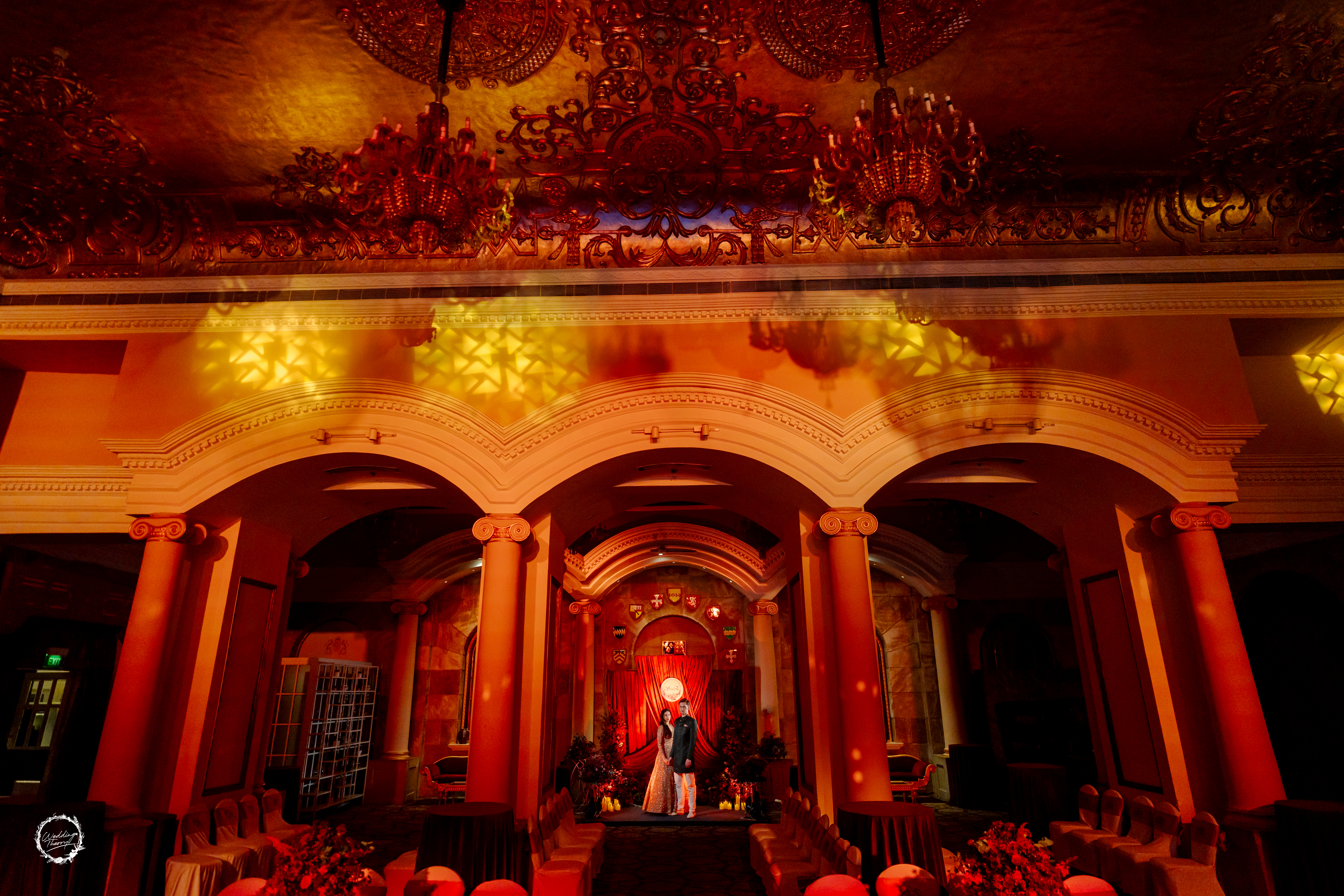
That usually means resisting the urge to over-light. A mandap lit with a single warm source will read more honestly than one blasted with flash. A mehendi photographed in available daylight will keep the greens and oranges of the marigolds intact instead of washing them out.
Why We Rarely Use Flash During Rituals
Flash has its place, mostly during the reception or in genuinely dark halls. During the rituals, though, it flattens everything. It turns a room full of warm, uneven light into something that looks like a corporate event.
We would rather push the ISO and accept a little grain than lose the mood. Grain can be beautiful. A blown-out mandap cannot.
What This Means for the Album You Actually End Up With
The photographs that hold up over time from a traditional Indian wedding are not the ones with the most people in them. They are the ones with the most truth in them. A moment of stillness during a ceremony that lasted three hours. A look between two people who have been married for forty years, watching their son do the same thing.
If you are planning a traditional wedding and want coverage that prioritises those moments over the obvious ones, that is the work we do. It is slower, quieter, and it asks for a little more patience from everyone involved. The album is worth it.